Jump to content


Featured Articles

Check out the latest featured articles.

File Library

Check out the latest downloads available in the File Library.

New Article

Product Viscosity vs. Shear

Featured File

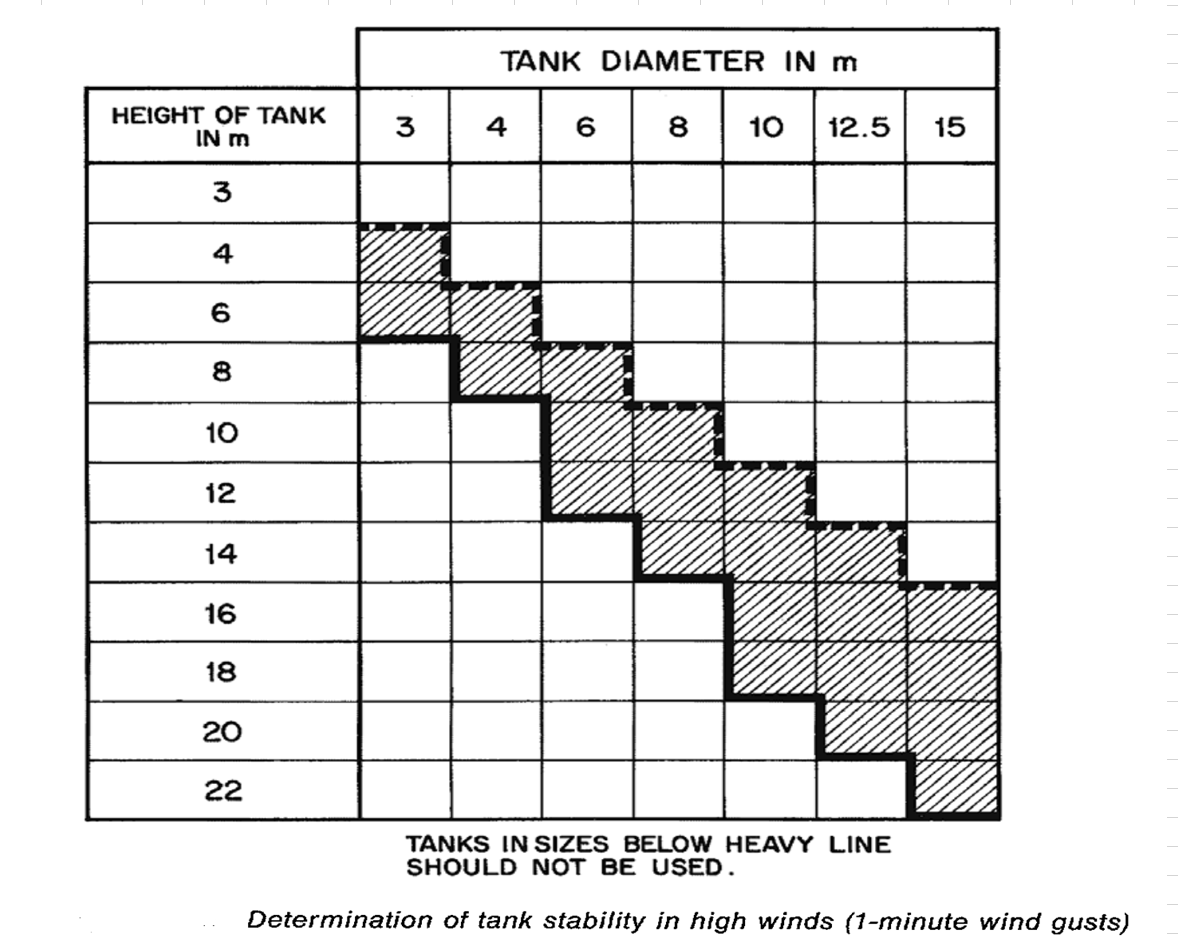
Vertical Tank Selection

New Blog Entry

Low Flow in Pipes- posted in Ankur's blog

- - - - -

Boiler Analysis (Transient State)

reboiler boiler heat transfer transient state non-steady state

This topic has been archived. This means that you cannot reply to this topic.
11 replies to this topic
Share this topic:
| More

#1 Felipe Hinojosa P.

Felipe Hinojosa P.

    Junior Member

  • Members
  • 13 posts

Posted 26 April 2013 - 09:04 PM

Hi everyone, I'm working in a  boiler analysis operating to provide steam for a sterilization process. My problem happens when I try to calculate the time the boiler takes to reach the  steady state at 4 and 6 bar. 


For the messure I was thinking about how to use the mass balance, heat balance and the Ideal gases law. Anyway I'm not able to obtain any relationship to solve this. The mass balance is accopled to the heat balance but I'm not sure how to use the ideal gases law to solve this diferential equations system.


Can anyone help me? Have someone any resolution for the time?, I've been dealing with this problem all week long. 


#2 thorium90

thorium90

    Gold Member

  • Members
  • 1,073 posts

Posted 26 April 2013 - 10:00 PM

dm/dt
dQ/dt
dP/dt

Mass, heat, pressure.
Gas law
Q=m Cp dT
You might have noticed the interelation between them. Use numerical methods like newton raphson or forward difference.
Keep doing the iterations until steady state

Edited by thorium90, 26 April 2013 - 10:05 PM.


#3 Felipe Hinojosa P.

Felipe Hinojosa P.

    Junior Member

  • Members
  • 13 posts

Posted 26 April 2013 - 11:00 PM

Thanks Thorium90

That's exactly what i've done! I'm pretty sure i got the problem in the mass balance and the gas law derivation.


dm/dt= dHUl/dt + dHUv/dt=0


dP/dt=d(RT*HUv/MW*V)/dt=(RT/MW*V)*dHUv/dt + (R*HUv/MW*V)*dT/dt


that should be or what?


HUl: liquid holdup

HUv: vapor holdup

V=? (which volume should it be, the specific one, the boiler volume for the vapor(which I should estimate), which one?)?

where should I suppose to use the vapor pressure?, because I'm pretty sure I have to


Edited by Felipe Hinojosa P., 26 April 2013 - 11:02 PM.


#4 thorium90

thorium90

    Gold Member

  • Members
  • 1,073 posts

Posted 26 April 2013 - 11:15 PM

Recall Initial value problems. Recall system of differential equations.

A nice article for your reading.

http://www.google.co...6,d.bmk&cad=rja


Edited by thorium90, 26 April 2013 - 11:17 PM.


#5 Felipe Hinojosa P.

Felipe Hinojosa P.

    Junior Member

  • Members
  • 13 posts

Posted 27 April 2013 - 02:11 PM

Thorium90, thank you so much, but I'm pretty sure my problem is not the numeric method to solve with. 


Can you tell me if i made the system the right way? I'm uploading a pdf with the system I've formed (but not sure how to do it).


#6 Felipe Hinojosa P.

Felipe Hinojosa P.

    Junior Member

  • Members
  • 13 posts

Posted 27 April 2013 - 02:17 PM

I know first of all, I have to solve the system to obtain the form


x1'=f(x1,x2,x3,x4)

x2'=f(x1,x2,x3,x4)...


and the use the numercial method


#7 thorium90

thorium90

    Gold Member

  • Members
  • 1,073 posts

Posted 27 April 2013 - 02:32 PM

You can choose to solve analytically if possible, but your system may benefit from numerical solvers. To be frank, I did not look at your equations in post 3 primarily because your description of your problem is unclear, vague, ambiguous. I don't even know why the pressure in your steam boiler is changing. All we know is that there is sterilization involved. Im assuming you are calculating the dynamic pressure changes in the steam drum due to some unknown effects (presumably consumption of steam by the sterilization process)

It would appear you know your own system best and therefore would know the derivation.


To add attachments, click on more reply options.


Edited by thorium90, 27 April 2013 - 02:45 PM.


#8 Felipe Hinojosa P.

Felipe Hinojosa P.

    Junior Member

  • Members
  • 13 posts

Posted 27 April 2013 - 03:05 PM

The problem I'm analizing is a boiler at the beginnig of its operation. At the beginning, there's no stream going in or out the boiler. Just the water is inside the boiler and the valves are closed (except the one which let the air of the drum go out) until it start to produce vapor and then that valve is closed. The boiler is fully closed until the vapor reaches the final operation pressure. So the pressure is changing with the time.


#9 Felipe Hinojosa P.

Felipe Hinojosa P.

    Junior Member

  • Members
  • 13 posts

Posted 27 April 2013 - 03:08 PM

here I upload my sistem.. and I'm pretty sure I have to use another equation with Antoine to define the system pressure as its relation with the saturate temperature since the system is in equilibrium.

Attached Files


#10 breizh

breizh

    Gold Member

  • Admin
  • 6,984 posts

Posted 28 April 2013 - 12:32 AM

Felipe,


Try to find a copy of Babcok & Wilcox steam book V41 ,this will certainly help you . I f I remember well you should be able to find some info using the search engine on this forum , Chris Haslego made this document available .


Breizh


#11 thorium90

thorium90

    Gold Member

  • Members
  • 1,073 posts

Posted 28 April 2013 - 10:56 AM

So essentially you want to find the time it takes to heat a vessel of water until it boils and the pressure reaches 6 bar? As to why it reaches a steady state at 6 bar is also a mystery. Im going to assume at that point in time, some valve is opened.


The time it takes to heat the water to the boiling point wrt the pressure inside should be pretty easy for you. Im going to assume you can do that. I believe your problem is in calculating when it boils, how long it takes to reach a certain pressure.


I shall start by assuming a closed vessel filled with a certain amount of water that is at atmospheric pressure and is at its boiling point.


Upon addition of a certain quantity of heat, some of it would boil. The vapor space above it would start to contain wet steam. Quality shall refer to the dryness fraction. The enthalpy of this wet steam would be as follows


Wet steam enthalpy = Enthalpy of evaporation * Quality + (1 - Quality) * Water enthalpy


Enthalpy values can be found from the tables for the starting pressure (atm press).

Solve for the Quality.

Specific volume can be found as follows.


Specific volume = Dry steam specific volume  * Quality


With the specific volume, one can calculate the new pressure as follows.


Pressure = R * Temperature / Specific volume


Assuming the amount of heat added is small enough, this actual pressure would have little effect on the enthalpy values chosen and therefore no recalculation and iterations for the enthalpy and specific volumes are needed.

With this new pressure and the addition of another quantity of heat, repeat all the previous steps to obtain a new pressure.

Knowing the rate of heat addition, one would be able to keep doing the above for each time (and hence heat rate) step and would therefore have a temperature and pressure profile for a closed boiler with respect to time.


As you might have already observed, I have made some notable assumptions like the volume of water remaining the same throughout the time. It can be done much more rigorously by calculating the amount of water vaporized and the new specific volume resulting.


Edited by thorium90, 28 April 2013 - 01:09 PM.


#12 Felipe Hinojosa P.

Felipe Hinojosa P.

    Junior Member

  • Members
  • 13 posts

Posted 30 April 2013 - 01:44 AM

exactly Thorium90, at 6 bar two valves are opened to keep the vessel in steady state. Okey so with the Quality... that is a lot of sense to me.

Thanks to all of you.


Similar Topics