
 Forums
 Blogs
Blogs Articles
 File Library
 FAQ
FAQ Search
 FB
FB
Chemical and Process Engineering Resources


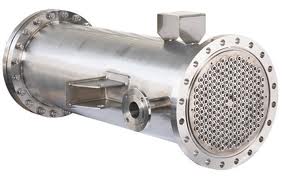
Calculating heat exchanger effectiveness allows engineers to predict how a given heat exchanger will perform a new job. Essentially, it helps engineers predict the stream outlet temperatures without a trial-and-error solution that would otherwise be necessary. Heat exchanger effectiveness is defined as the ratio of the actual amount of heat transferred to the maximum possible amount of heat that could be transferred with an infinite area.
Two common methods are used to calculate the effectiveness, equations and graphical. The equations are shown below:
 | Eq. (1) |
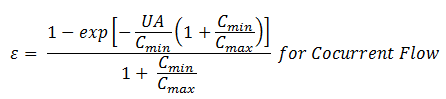 | Eq. (2) |
where:
U = Overall heat transfer coefficient
A = Heat transfer area
Cmin = Lower of the two fluid's heat capacities
Cmax = Higher of the two fluid's heat capacities
Oten times, another variable is defined called the NTU (number of transfer units):
NTU = UA/Cmin
When NTU is placed into the effectiveness equations and they are plotted, you can construct the plots shown below which are more often used than the equations:
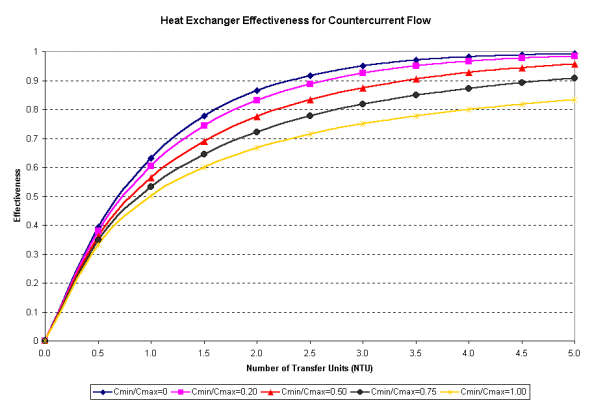 | 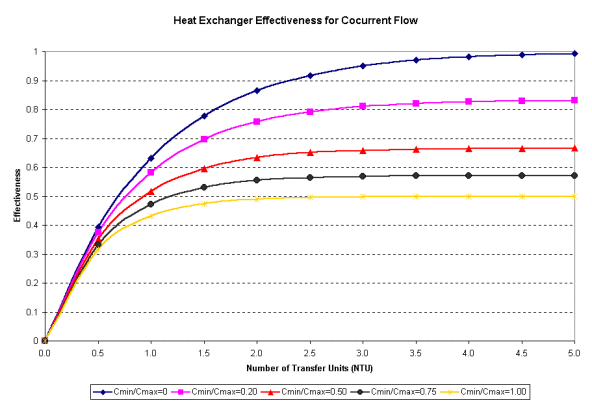 |
| Figure 1: Heat Exchanger Effectiveness for Countercurrent Flow | Figure 2: Heat Exchanger Effectiveness for Cocurrent Flow |
Q = Effectiveness x Cmin x (Hot Temperature in - Cold Temperature in)
and the outlet temperatures can be calculated by:
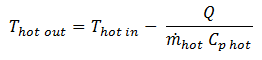 | Eq. (3) |
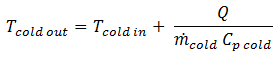 | Eq. (4) |
0 Comments