Removing dissolved oxygen from boiler feed water is absolutely necessary to protect your boiler equipment from severe corrosion. But the make-up water necessary in any boiler system inevitably contains dissolved oxygen. Oxygen can sometimes enter condensate systems as well. A good deaerator is essential to trouble-free boiler operation.
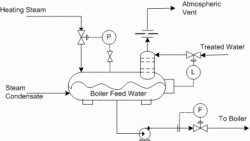
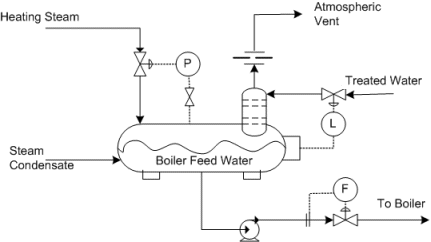
Above is a typical "older-style"
boiler feed water deaerator. You'll see why I call it "older" in a moment.
 The theory here is relatively simple. Treated water containing dissolved
oxygen is fed onto a contacting device where the water can be heated and contacted with
steam which is also fed to the vessel. The steam heats the incoming treated water to
around 250 °F (120 °C) and allows oxygen to escape (along with any small amount of
uncondensed steam) to the atmosphere. Notice that the returning condensate is NOT
contacted with the steam in this system. Some systems feed the treated water and
condensate together to ensure a very low oxygen content. Other systems do not bother
as the returning condensate is expected to already have a low oxygen content. You'll
see that newer systems are designed to treat both sources in most cases.
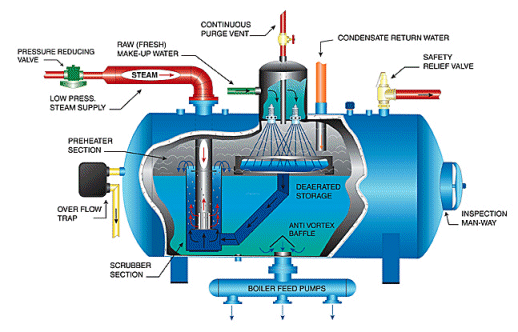
A next generation deaerator system from Hurst Boiler, called the Oxy-Miser,
utilizes a scrubbing section to contact oxygen-rich feedwater with steam rather than the
more traditional tray arrangement.Â
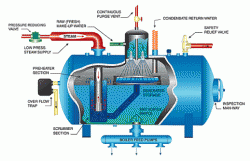
Again, you can see that both the treated
boiler feed water and the condensate return are sent through the scrubbing section of the
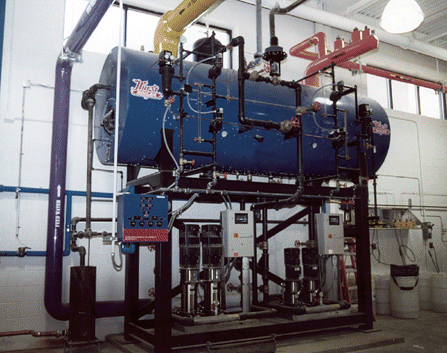
deaerator. The Oxy-Miser system is available in capacities ranging from 5,000 to
200,000 lb/h (2300 to 91000 kg/h). Below is an actual installation photo:
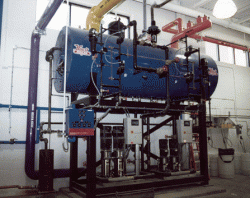
If you'd like to learn more about the
Oxy-Miser Deaerator from Hurst Boiler, use this link: http://www.hurstboiler.com/oxymiser.htm
Utilities Articles

 Forums
 Blogs
Blogs Articles
 File Library
 FAQ
FAQ Search
 FB
FB


1 Comments
hi
thank you for text
do you know any reference for design criteria of deaerator?