Jump to content


Featured Articles

Check out the latest featured articles.

File Library

Check out the latest downloads available in the File Library.

New Article

Product Viscosity vs. Shear

Featured File

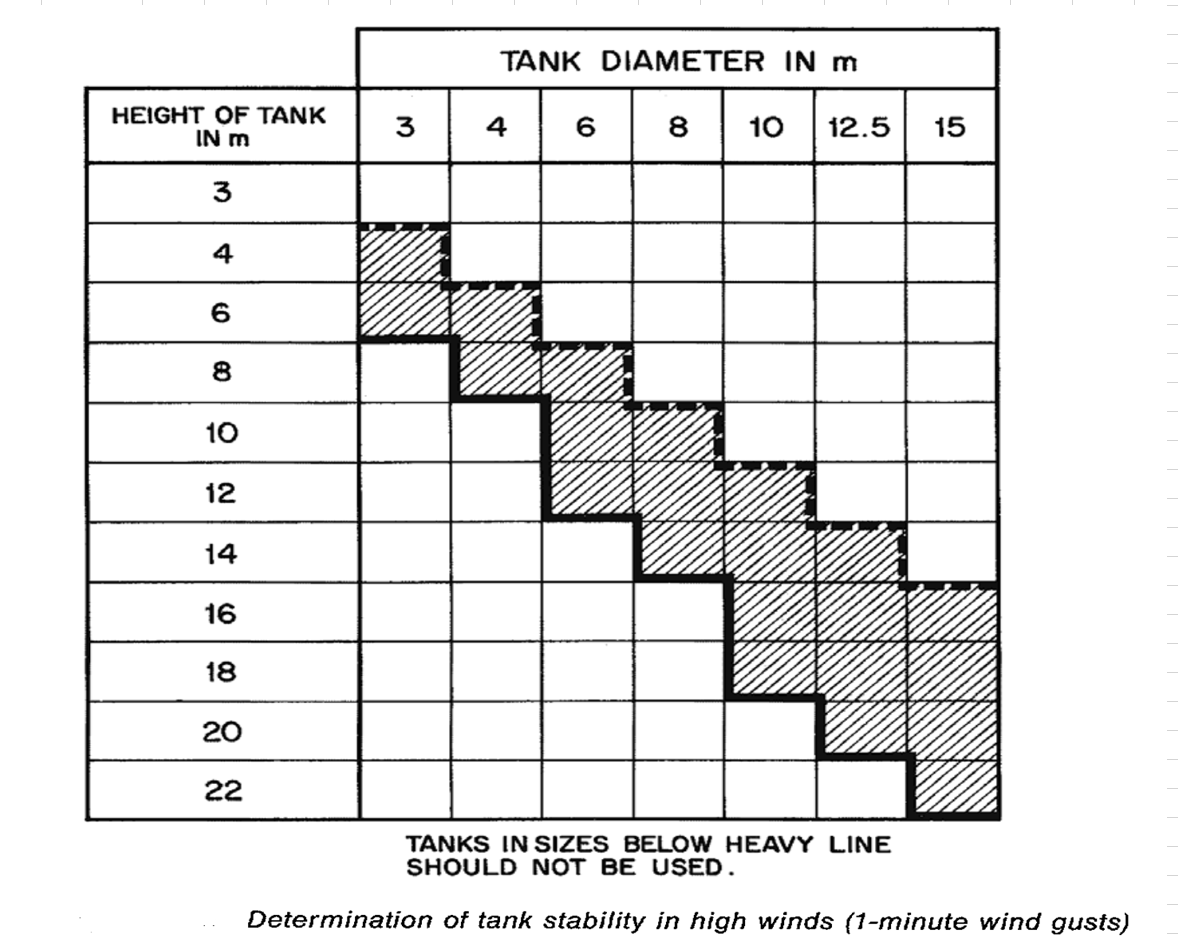
Vertical Tank Selection

New Blog Entry

Low Flow in Pipes- posted in Ankur's blog

Hipps Scenario


This topic has been archived. This means that you cannot reply to this topic.
7 replies to this topic
Share this topic:
| More

#1 Yogesh Bhatt

Yogesh Bhatt

    Veteran Member

  • Members
  • 38 posts

Posted 11 March 2013 - 01:46 AM

Hi All


We have 5 wells operating in an offshore platform. Each flowline connects the production manifold.


We have 2 cases here:


CASE1: HIPPS valves installed on each well flowline.


CASE2: HIPPS valve installed only on the production header.


Now I need to know which case would be ideally preferred and why ? I don't think technically there is any issue having any of the cases. But in my opinion CASE 2 should be preferred for the following reasons:


1. Having single HIPPS system on the platform will occupy lesser space compared to having 5 of them.

2. I am not sure about the cost but I think in CASE-2 cost would be less even though the valve size is higher beacuse of lot of instrumentation and electrical requirements in having 5 numbers of small size valves.

3. Having 1 no. HIPPS valve seems more reliable than having 5.


Experts! please provide your valuable experience on this and also correct me if my opinion is wrong.


Thanks


#2 shan

shan

    Gold Member

  • ChE Plus Subscriber
  • 692 posts

Posted 11 March 2013 - 06:45 AM

HIPPS is intended to protect the production platform.  The number and location of HIPPS shut down valves depend on the location of piping spec breaks.


#3 paulhorth

paulhorth

    Gold Member

  • ChE Plus Subscriber
  • 396 posts

Posted 11 March 2013 - 09:07 AM

Yogesh,


I agree with you that the second case, with a single HIPPS system on the production header, is to be preferred, provided that the header has the same design pressure as the flowlines, equal to the shut-in pressure of the wells.

Reasons are those you state, in addition there is the requirement for regular testing of a HIPPS system. If you had five of them you would be testing very frequently. And each HIPPS will require a dedicated logic box housed in a safe (fireproof) location with hard wiring etc.


Paul


#4 Yogesh Bhatt

Yogesh Bhatt

    Veteran Member

  • Members
  • 38 posts

Posted 12 March 2013 - 12:15 AM

Thanks Paul.


Can we achieve SIL-3 in both the cases ? Also I would like to know how these SIL levels are decided.

My senior told me that in CASE-1 we can not achieve SIL-3. Why is that so ?


I would appreciate if you can help me with the clarifications.


Thanks


#5 Sathya R

Sathya R

    Veteran Member

  • ChE Plus Subscriber
  • 35 posts

Posted 12 March 2013 - 12:51 AM

SIL Levels are decided during SIL study where in effect (environmental, human life and loss of prouction and maintenence cost)of failure  of the shutdown element is evaluated and SIL Level is verified based on Probability of Failure on Demand(PFD).


#6 fallah

fallah

    Gold Member

  • ChE Plus Subscriber
  • 5,026 posts

Posted 12 March 2013 - 02:55 AM

Yogesh Bhatt,


Since all devices used in HIPPS components; process sensors, logic solver, final element, might contribute to the potential PFD for the HIPPS, the structure of the relevant loop must be defined and specified as a system such that the entire loop meets SIL degree requirement.

Then, each HIPPS in both cases (1,2) can achieve SIL3, but if the sensing location would be downstream of the production header, your senior concern about the case 1 might be logical because it might during a process upset all 5 HIPPS valves not to be closed at the same time due to, let say, differences (even minor) in their response times.


#7 paulhorth

paulhorth

    Gold Member

  • ChE Plus Subscriber
  • 396 posts

Posted 12 March 2013 - 07:05 AM

Yogesh,


I agree with Fallah's post.

I would add that it is more demanding for five separate HIPPS systems to meet SIL3 when combined, than for a single system. There are 5 times as many ways for a fault to occur, so the individual systems would have to be 5 times more reliable to meet the overall requirement for SIL3 (which means a probability of failure on demand of 1 in 1000). This may be what your senior has in mind.


The SIL level REQUIREMENT for a protection system is decided as Sathyanarayanan says, by determining the  consequences of a failure, and from that, esimating the acceptable frequency of such an event. The SIL RATING of the protection system (its reliability, its frequency of failure) has to match the requirement, and the rating is something certified by the equipment suppliers based on redundancy of components, frequency of testing, and their own quality procedures.


Paul


#8 Yogesh Bhatt

Yogesh Bhatt

    Veteran Member

  • Members
  • 38 posts

Posted 18 March 2013 - 01:12 AM

Thanks everyone for your valuable explanation. This gives me a better understanding.


Similar Topics