Jump to content


Featured Articles

Check out the latest featured articles.

File Library

Check out the latest downloads available in the File Library.

New Article

Product Viscosity vs. Shear

Featured File

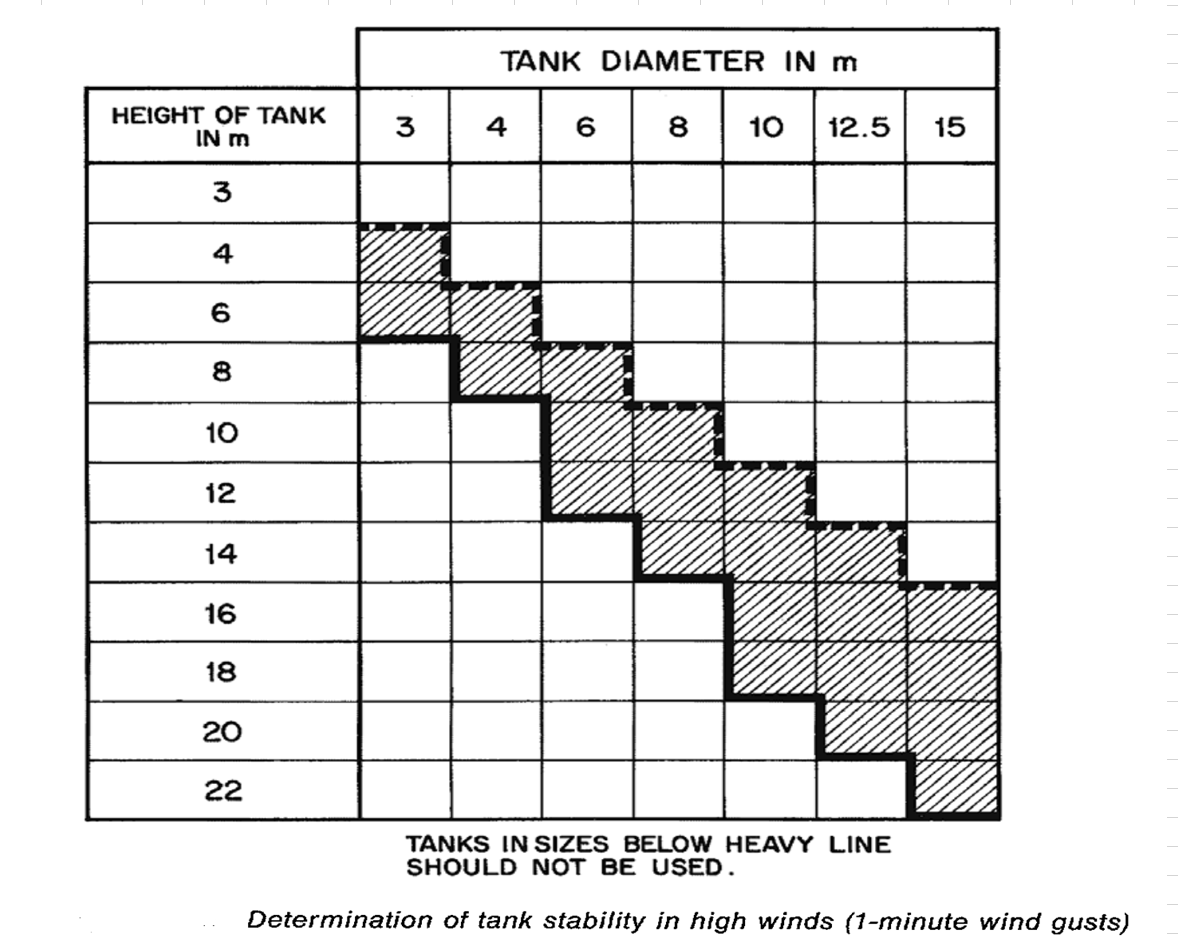
Vertical Tank Selection

New Blog Entry

Low Flow in Pipes- posted in Ankur's blog

Natural Gas Dehydration Using Silica Gel

dehydration silica gel

This topic has been archived. This means that you cannot reply to this topic.
3 replies to this topic
Share this topic:
| More

#1 heweili

heweili

    Brand New Member

  • Members
  • 5 posts

Posted 09 September 2013 - 10:53 AM

Hi All,


I'm a student from University of Washington.


Recently I started doing a research project on Natural Gas Dehydration.


I would like to propose a question expecting professionals in this forum would help me on it.


How much gas was dehydrated by silica gel/activated alumina?


Thanks in advance!


#2 Art Montemayor

Art Montemayor

    Gold Member

  • Admin
  • 5,782 posts

Posted 09 September 2013 - 11:29 AM

Heweili:


I presume English is not your base language.  Your question: "How much gas was dehydrated by silica gel/activated alumina?" does not make grammatical sense.  What, specifically, kind of gas are you referring to?  I don't mean whether it is natural or any other type of gas.  I mean: what application of natural gas do you refer to?


Do you mean field natural gas? - or pipeline natural gas for domestic and industrial burning purposes? - or do you mean natural gas intended for conversion to LNG (Liquefied Natural Gas)?   There are other applications of natural gas also, but please be specific as to what you mean.  If you are actually doing a research project, you should already know the importance of being specific and to the point - with clear and succinct description or explanation.


#3 heweili

heweili

    Brand New Member

  • Members
  • 5 posts

Posted 09 September 2013 - 04:31 PM

Mr. Montemayor,


Thank you for your reply and kind reminder.


Sorry for my expression mistakes. I guess my question is more from a production side. 29,791,910 Million Cubic Feet is the total US production of NG in 2012 including withdraws from gas wells, oil wells, shale gas wells and coalbed wells.


Among those raw natural gas, I want to figure out what portion of them has been dehydrated by silica gel or glycol. This is my initiative.


However, if answers/statistics could only become available with specified application, I would like to know the answer for "pipeline natural gas for domestic and industrial burning purposes".


From reviewing other topics in this forum I learned that you are the most knowledgeable person in this field, thus I really appreciate your reply and I believe you are the right person I should turn to for help. Please let me know if there are any other given conditions that I should provide.


Thanks again and waiting for your reply sir!



#4 Art Montemayor

Art Montemayor

    Gold Member

  • Admin
  • 5,782 posts

Posted 10 September 2013 - 07:48 AM   Best Answer

Heweili:


Practically all raw, wellhead natural gas can be assumed as produced in the water-saturated state.  From this point on forward (going “Downstream”), the gas is divided up into various uses or applications:

  1. Re-injection as “gas-lift” medium for producing more petroleum from the same associated production wells;
  2. If “rich” (combined with other, heavier hydrocarbon gases – ethane, ethylene, propane, butane) enough, the produced gas is routed to a gas processing unit where the heavier components are separated and the remaining, essentially pure methane is sent to natural gas pipelines for sale as domestic and industrial fuel;
  3. If the wellhead produces essentially only natural gas, it is dehydrated and routed to a transport pipeline for sale;
  4. If the wellhead is remote and the gas production small, the gas content may be flared in some instances.  This is now rare and sometimes prohibited by law.

An excellent and instructive article by Milton Beychok is found at: http://en.citizendiu...iki/Natural_gas


The reasons for dehydrating raw, wellhead natural gas as produced above are:

  1. The natural gas used for gas-lift operations must be dehydrated before being injected into the well and glycol dehydration is used to dry it to pipeline water content standards of 7 lb/MMScf.  This gas is constantly recycled and not produced for sale;
  2. Rich natural gas meant for processing is dried to much lower water content levels because the processing is due at cryogenic temperatures where water ice formation is prohibitive.  To carry out this dehydration, an adsorption process is used that incorporates fixed adsorption beds of Activated Alumina, Molecular Sieves, or a combination of both;
  3. Dehydration of natural gas meant for pipeline transport is normally done by using glycol dehydration.  Triethylene Glycol (TEG) is the glycol of choice.  This is done in order to protect the transport pipeline from water corrosion and more importantly to mitigate the formation of methane hydrates (gel-like substance) in the pipeline with eventual plugging of the same;
  4. Natural gas that is converted to Liquefied Natural Gas (LNG) is also dehydrated similarly to that in processing plants because the cryogenic temperatures attained in that process are even colder: -260 oF.

So, in effect, ALL natural gas must be dehydrated in some fashion if it is to be handled and transported through pipelines and or LNG transport vessels.  I don't have the statistics on what quantities are pipelined for fuel and what quantities are used elsewhere, but I am sure that the U.S. Department of Energy has those figures and may share them with you if you contact them in doing your research.   I am attaching an article from the U.S. EPA that may be of interest to you.

 Attached File  Replace Glycol Dehydration with Deliquescent Dryers-EPA.pdf   470.96KB   76 downloads


Similar Topics