Jump to content


Featured Articles

Check out the latest featured articles.

File Library

Check out the latest downloads available in the File Library.

New Article

Product Viscosity vs. Shear

Featured File

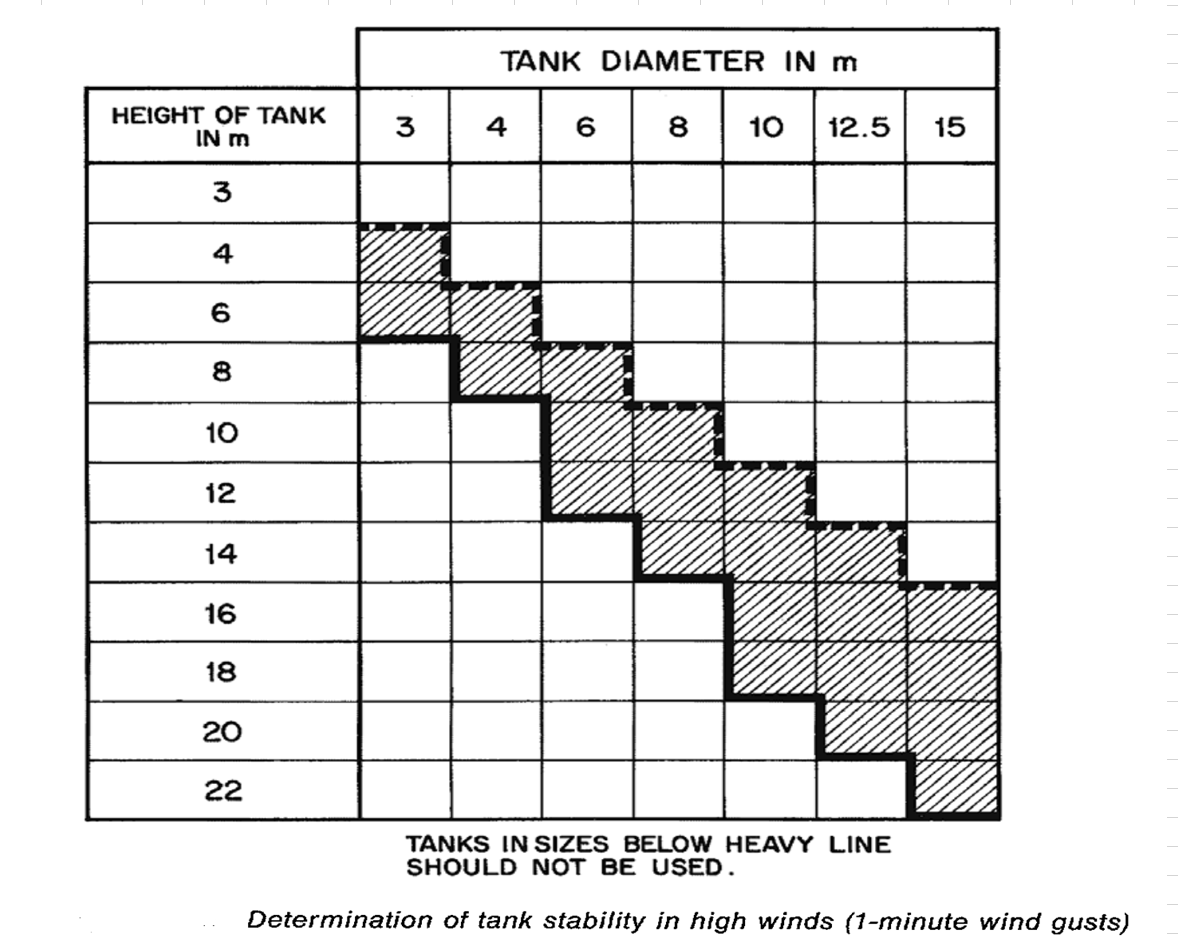
Vertical Tank Selection

New Blog Entry

Low Flow in Pipes- posted in Ankur's blog

3

Gas Blanketing Vent Size For Atmospheric Storage Tank

nitrogen api2000 blanketing vent sizing api650

6 replies to this topic
Share this topic:
| More

#1 Fergie

Fergie

    Brand New Member

  • Members
  • 2 posts

Posted 13 April 2026 - 11:51 AM

Dear Folks,

I'am a mechanical engineering student with final project to design 2500 mgasoline storage tank according to API 650. 

The design of the roof is cone roof + gas blanket.
Known Data: 

  • Tank Capacity : 2500 m3
  • Tank Internal Diameter : 17.2 m
  • Height : 12 m
  • Liquidin : 286.1 m3/hr
  • Flash point : -43 oC

What I've done is calculate the capacity of N2 using API 2000 for inbreathing,

  • Qinbreathing liquid : 268.9 Nm3/hr
  • Qinbreathing thermal : 422.5 Nm3/hr
  • Qtotal : 691.4 Nm3/hr = 0.19 Nm3/s

After that, using "Rules of Thumb for Chemical Engineers By Carl Branan"

  • Suggested Fluid Velocity N2 (Air = 78% N2) : 4000 fpm = 20.32 m/s
  • Typical Design Vapor Velocity (Gas or Superheated Vapor 0 to 15 psig) : 50 - 145 ft/s (pick 65 ft/s = 19.8 m/s so < 20.32 m/s)

After that, 

  • A = Q / v = 0.19 / 19.8 = 0.0097 m2
  • D = SQRT(4 x 0.0097 / PI) = 111.13 mm

Then with SCH 40 that satisfied the D and common in the market is 6" (154.05 mm)

Does my calculation is correct? 
If wrong, can someone please explain the other way to calculate it because after read the API 2000 that is what I thought.
Thanks in advance !!




#2 Pilesar

Pilesar

    Gold Member

  • Admin
  • 1,643 posts

Posted 13 April 2026 - 02:03 PM

API 2000 calculations changed significantly between 5th and 6th editions around the year 2009 or so. Carl Branan's reference is probably older than that -- at least for the initial versions of his Rules of Thumb. As a student project, I suggest documenting your source for the latest references. API 2000 is an official reference, Branan's book is useful for a reality check of your calcs, but defer to API if there are any differences. See also this linked article https://studylib.net...570/d352286x012


#3 breizh

breizh

    Gold Member

  • Admin
  • 6,947 posts

Posted 13 April 2026 - 10:40 PM

Hi,

Other supportive documents.

Breizh

Attached Files


#4 Fergie

Fergie

    Brand New Member

  • Members
  • 2 posts

Posted Yesterday, 03:10 AM

Thank you both for the reply, so I need to revise my calculations in accordance with the latest API2000. Once I have the new required capacities for inbreathing, what should be my next step? 
 

To clarify, was my application of Carl Branan's Rules of Thumb correct (as shown in my calculation above)? I noticed that the next step mentioned from "overview-of-api2000.pdf" was to select a valve based on flow capacities, seemingly skipping the minimum diameter requirement. Is that the standard procedure?"


#5 breizh

breizh

    Gold Member

  • Admin
  • 6,947 posts

Posted Yesterday, 07:33 AM

Hi,

The next step should be the calculation of the control valve!

Based on process condition (Flow rate, temperature and pressure), In the real life this is done by E&I engineer.

Because you are a student you should understand the calculation. I've attached document to support.

EDIT : you seem not understand the difference between Nm3/h and m3/h.  

Flowrate should be defined at process condition (T,P). to size a valve. 

Note: one way to solve it is to use continuity equation and work kg/h.

Breizh

Attached Files


#6 Pilesar

Pilesar

    Gold Member

  • Admin
  • 1,643 posts

Posted Yesterday, 07:57 AM

As you are discovering, storage design is much more complex than is obvious at first appearance. Your cone roof tank will have a large volume at the top which is filled with vapor. It is the gasoline vapor that burns so easily when ignited. Your design relies solely on nitrogen to keep the vapor composition below the flammable region. Some real-world  considerations: How certain is the nitrogen supply? Are there redundant systems? How can the nitrogen flow be confirmed and maintenance be performed without interrupting the safety of the storage? What would be the hazard if the nitrogen were not there and the entire storage area above the liquid were filled with gasoline vapor? In the real world, it would be unusual to store gasoline in a cone roof tank. To reduce the amount of the extremely hazardous vapor, gasoline storage usually has a roof that floats right on top of the liquid and moves up and down along with the liquid level of the tank. This link is to another article breizh introduced me to: https://pdfcoffee.co...s-pdf-free.html


#7 breizh

breizh

    Gold Member

  • Admin
  • 6,947 posts

Posted Yesterday, 11:37 PM

Hello Mas,

In addition to my previous replies, document about safety and storage of flammable material.

A link for design is added.

Storage-Tanks-Basis-Design-Of-Tanks.pdf

Breizh

Attached Files


Similar Topics