Jump to content


Featured Articles

Check out the latest featured articles.

File Library

Check out the latest downloads available in the File Library.

New Article

Product Viscosity vs. Shear

Featured File

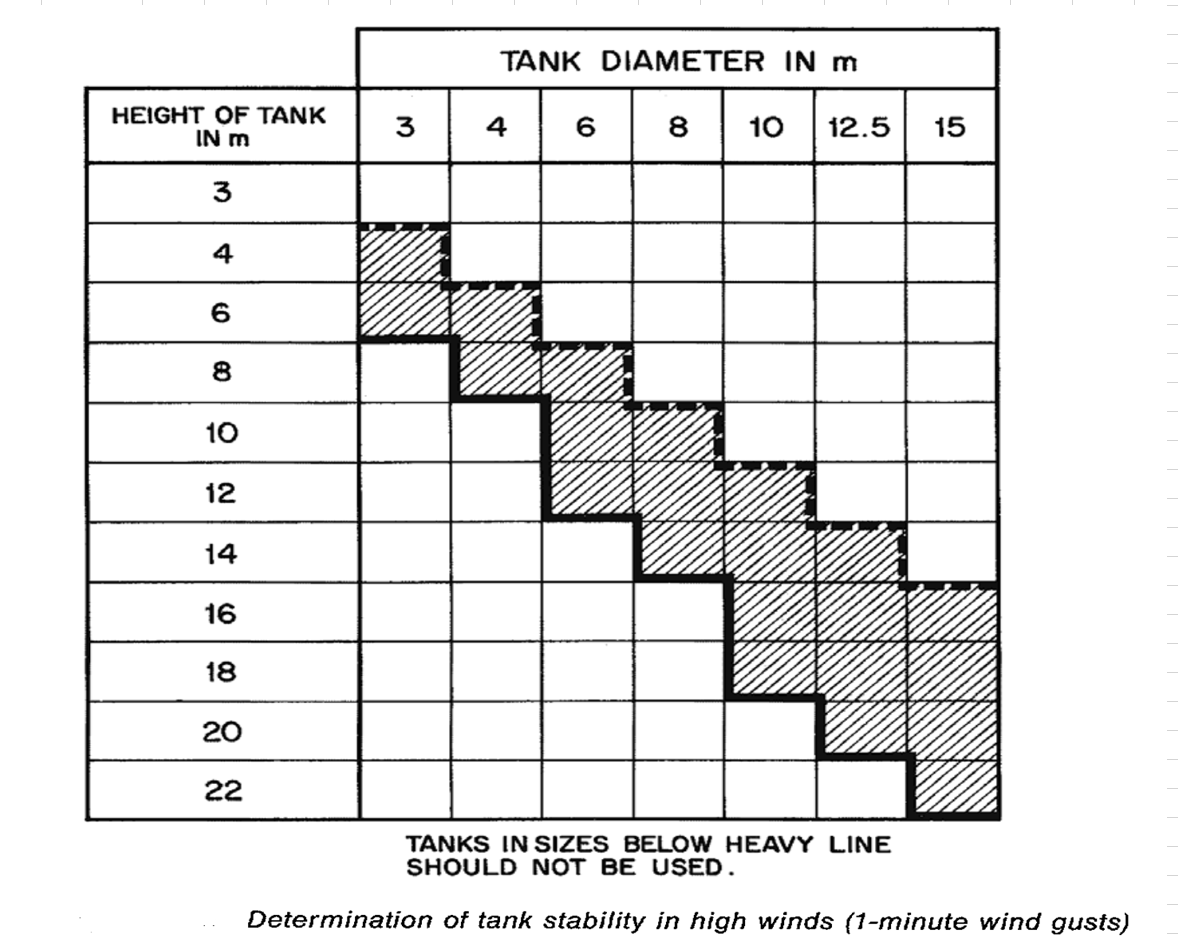
Vertical Tank Selection

New Blog Entry

Low Flow in Pipes- posted in Ankur's blog

From Sourgas To Sweetgas Using Pro/ii


This topic has been archived. This means that you cannot reply to this topic.
5 replies to this topic
Share this topic:
| More

#1 bytesurfer

bytesurfer

    Brand New Member

  • Members
  • 2 posts

Posted 27 April 2014 - 11:55 AM

Dear Ladies and Gentlemen,


I have a problem with my simulation using Pro/II.


This semester we have to calculate and design a hydraulic fracturing plant. My assignment is the whole part referring the cleaning of the sourgas to sweetgas using the Low Temperature Separation (Joule-Thompson).


So far I found this PFD (attached) and recreated the model in Pro/II. Apparently I am not allowed to attach the Pro/II file itself, but I hope the pictures will work, too. Or am I allowed to attach the Pro/II file as .rar?


The problem is, that the last separator either just liquid or just vapor separates. The stream "s10" is not calculated and therefore is the calculation of the heat exchanger not right either. I tried calculating the saparator as a standing alone apparatus using a similar feed ("s9"). That seems to work. If I try to attach the original stream "s8" the problem occurs again. Furthermore I created a similar stream ("s7") for the heat exchanger, so that part would be calculated and would work properly. The stream "s2" is the TEG, which should remove the remaining water in the gas.


The last separator has a pressure of 70bar and a temperatur of -32°C. At that pressure and temperature everything except Methane, Nitrogen, Carbondioxide and a little bit of Ethane, Helium and Argon should rain out. Especially the TEG, which is used for drying purposes. But Pro/II decides to either liquify the whole feed or to let everything go out as vapor.


The thermodynamic Data is provided by Soave-Redlich-Kwong for the VLE. I don´t know what to choose for the LLE, because I tried a few and everytime occurred an error.


Maybe someone can help me with this problem.

Thank you in advance!


Regards,

bytesurfer

Attached Files


#2 PingPong

PingPong

    Gold Member

  • Members
  • 1,474 posts

Posted 28 April 2014 - 06:41 AM

I am not an expert in this field, but in my opinion the purpose of an LTS is to remove water and heavy hydrocarbons from the natural gas, not to make it sweet. That would take a specific absorber column using an amine, or selexol, or ...


Your stream table only shows standard volumetric flowrates for gas and liquid. This is very inconvenient. A proper stream summary table shall have mass flowrates for all streams. And mol masses, densities, et cetera, for all streams.

The gas feed is indicated to contain almost 7 weight % mercury. Really?


It seems that your gas feed stream GAS-WELL is very small at only 99 standard m3/h. How much kg/h is that? Less than 100 kg/h? However the amount of TEG you add by stream S2 is 49 m3/h, which is HUGE compared to the tiny amount of gas. That may be (one of) the cause(s) that you get only one liquid phase in the last separator.

The glycol is only there to prevent formation of hydrates or ice when the gas passes the JT valve and gets very cold. Its quantity should be small compared to the amount of gas. You should read about the Hammerschmidt equation.

http://www.cheresour...n-calculations/


You should first get your feeds (gas and glycol) right, and also try to use other thermo methods, like GLYCOL, or SOUR


Edited by PingPong, 28 April 2014 - 06:47 AM.


#3 RockDock

RockDock

    Gold Member

  • Members
  • 257 posts

Posted 28 April 2014 - 08:47 AM

Your design will not make the gas sweet. It will help you avoid hydrates.


#4 bytesurfer

bytesurfer

    Brand New Member

  • Members
  • 2 posts

Posted 29 April 2014 - 10:45 AM

Thank you PingPong and RockDock for your fast answer.


I am not an expert in this field, but in my opinion the purpose of an LTS is to remove water and heavy hydrocarbons from the natural gas, not to make it sweet. That would take a specific absorber column using an amine, or selexol, or ...


You are right, I forgot the absorber column. I was so focused on my problem, I somehow forgot that part. :wacko:


I added an absorber column using MDEA to sweeten the gas.

It bothers me that I have to use a condenser for the absorber column. Without the condenser the simulation does not start and the program says that I have to add a water decanter stream. With the condenser I can add the water decanter stream ("s7"), but there is no water flowing out of it.


Your stream table only shows standard volumetric flowrates for gas and liquid. This is very inconvenient. A proper stream summary table shall have mass flowrates for all streams. And mol masses, densities, et cetera, for all streams.


I changed the stream table with your additions. You can see the stream table in the attachments.


The gas feed is indicated to contain almost 7 weight % mercury. Really?


I found my mistake for that one in the "Stream Data - Flowrate and Composition". Instead of "Composition Mass", I was using "Composition Mole".


It seems that your gas feed stream GAS-WELL is very small at only 99 standard m3/h. How much kg/h is that? Less than 100 kg/h? However the amount of TEG you add by stream S2 is 49 m3/h, which is HUGE compared to the tiny amount of gas. That may be (one of) the cause(s) that you get only one liquid phase in the last separator.


You are right again with the TEG flowrate. After seeing the mass rates in those streams, I saw that error quite clear. Somewhere I read that the amount of TEG to Gas should be 2:1 and I thought I could do that with the flow rates. It didn´t cross my mind that I was comparing a vapor and a liquid. That was not one of my brightest moments either, I guess.


About the 100 m³/h part. We decided to build a pilot plant and thus the flow rates are smaller than in normal plants. We will use a greater flow rate, but at the moment we are not quite sure how much it will really be in the end. And because I have still troubles with the simulation, I will keep it as it is for now.


and also try to use other thermo methods, like GLYCOL, or SOUR


For "SOUR" I have to use NH3 in my simulation. For "GLYCOL" I receive 6 errors saying that I have to use a LLVE for the absorber. I tried changing that, but the box I have to check is not available for clicking.


I am still using Soave-Redlich-Kwong for the VLE, but I have no clue what to use for the LLE. See attachment.


With all those adjustments the stream "SWEETGAS" now contains the higher alkanes. Those should be removed after the last flash. But apparently they are not.


Thank you again for your answers!


Regards,

bytesurfer

Attached Files


#5 RockDock

RockDock

    Gold Member

  • Members
  • 257 posts

Posted 30 April 2014 - 10:53 AM

There are a number of issues I see. You should separate your amine and glycol units, as shown in the attached files. You should model the columns with less ideal stages. The MDEA should be ~50wt%, not 100%. You also really ought to use ProMax, as there is no way Pro/II can do this simulation very accurately.

Attached Files


#6 PingPong

PingPong

    Gold Member

  • Members
  • 1,474 posts

Posted 30 April 2014 - 11:06 AM

For "SOUR" I have to use NH3 in my simulation. For "GLYCOL" I receive 6 errors saying that I have to use a LLVE for the absorber. I tried changing that, but the box I have to check is not available for clicking.
I meant for the separators, not for the amine column that you now added. For the amine system in PRO/II you must obviously use the AMINE package (look under special packages)


In would advise you to leave mercury and water out of the feed gas for the moment and don't add TEG either.  First get the whole system converged without a condenser on top of the amine absorber.