 Forums
 Blogs
Blogs Articles
 File Library
 FAQ
FAQ Search
 FB
FB

Dear Members,
I am new member here. Happy to join the team here.
What is the difference between Pneumatic Leak test and Pneumatic Pressure test?
Do you still need to consider safety distance for Pneumatic Leak Test?
Looking forward to your reply.

|
|
 0
0


Brand New Member

Posted 01 July 2019 - 11:16 PM
Dear Members,
I am new member here. Happy to join the team here.
What is the difference between Pneumatic Leak test and Pneumatic Pressure test?
Do you still need to consider safety distance for Pneumatic Leak Test?
Looking forward to your reply.
Gold Member


Posted 02 July 2019 - 12:24 AM
Hi,
Be more specific about your task . I know a story of a worker killed doing pressure test on HX using compressed air, the HX bursted... !
You should be using water together with a designed hand pump to build up the pressure .
http://www.wermac.or...re_testing.html
Hope this is helping you.
Breizh
Edited by breizh, 02 July 2019 - 12:40 AM.
Brand New Member
Posted 02 July 2019 - 02:26 AM
Thanks Breizh for your prompt reply.
Apologies for not making it specific.
We are planning to do pneumatic leak test at the Heat Ex for inspection purposes. The leak with be using Air and follow by Snoopy Liquid .
Do we treat leak test using air and pnuematic pressure test on safety distance.?
Hope it explains
Gold Member
Posted 02 July 2019 - 03:16 AM
Hi,
To be clear with you don't use compressed air to perform this kind of test !
Please read my initial answer and go through the document I passed to you and others to understand the risks . If you need more info about hydraulic leak test use your favorite search engine .
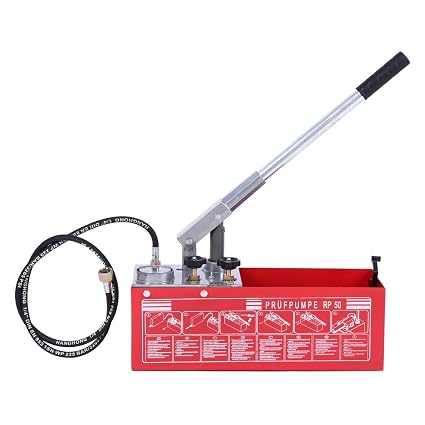
Hope this is understood .
In any case , this task should be performed by knowledgeable people and accountable.
My view.
Breizh
Edited by breizh, 02 July 2019 - 03:59 AM.
Gold Member

Posted 01 August 2019 - 10:56 AM
I use this opportunity to strongly concur with Breizh’s experienced advice on non destructive testing of process equipment. I would never approve or recommend pneumatic testing of process equipment unless there were clear and very strong reasons for doing so. Your application is clearly not one of them.
I don’t know what experience you have with testing process equipment, but by the nature of your queries I suspect it is very little or possible none. This gives me more concern and motivates me to tell you that best engineering practices dictate that hydrostatic testing is the recommended manner of non-destructive testing.
I have done both hydrostatic and pneumatic testing in the field. The only times that I have resorted to pneumatic was because of very special conditions that I couldn’t avoid. I had to test cryogenic distillation columns for integrity and for leaks. That is one of the few applications where hydrostatic can’t be done. Testing a conventional shell and tube heat exchanger is done hydrostatically. It is rather foolish and naive to think that there are “safe” distances involved with pneumatic testing. I have never heard of a method to determine such distances. You would be far safer and smarter if you applied hydrostatic testing instead of pneumatic.

Nitrogen Leak Test On PipeStarted by Guest_mesbah_* , 24 Oct 2024 |
|

|
||
Ethylene Tanks Cctv For Leak DetectionStarted by Guest_DarthJamming_* , 30 May 2024 |
|

|
||
Operational Integrity Test StandardStarted by Guest_phoenixmoca_* , 12 Nov 2023 |
|
|
||
Ron Express TestStarted by Guest_shvet1_* , 16 Aug 2023 |
|
|
||
Seal Pan Test In Distillation ColumnStarted by Guest_Venkat @89_* , 22 Feb 2023 |
|
|

