Jump to content


Featured Articles

Check out the latest featured articles.

File Library

Check out the latest downloads available in the File Library.

New Article

Product Viscosity vs. Shear

Featured File

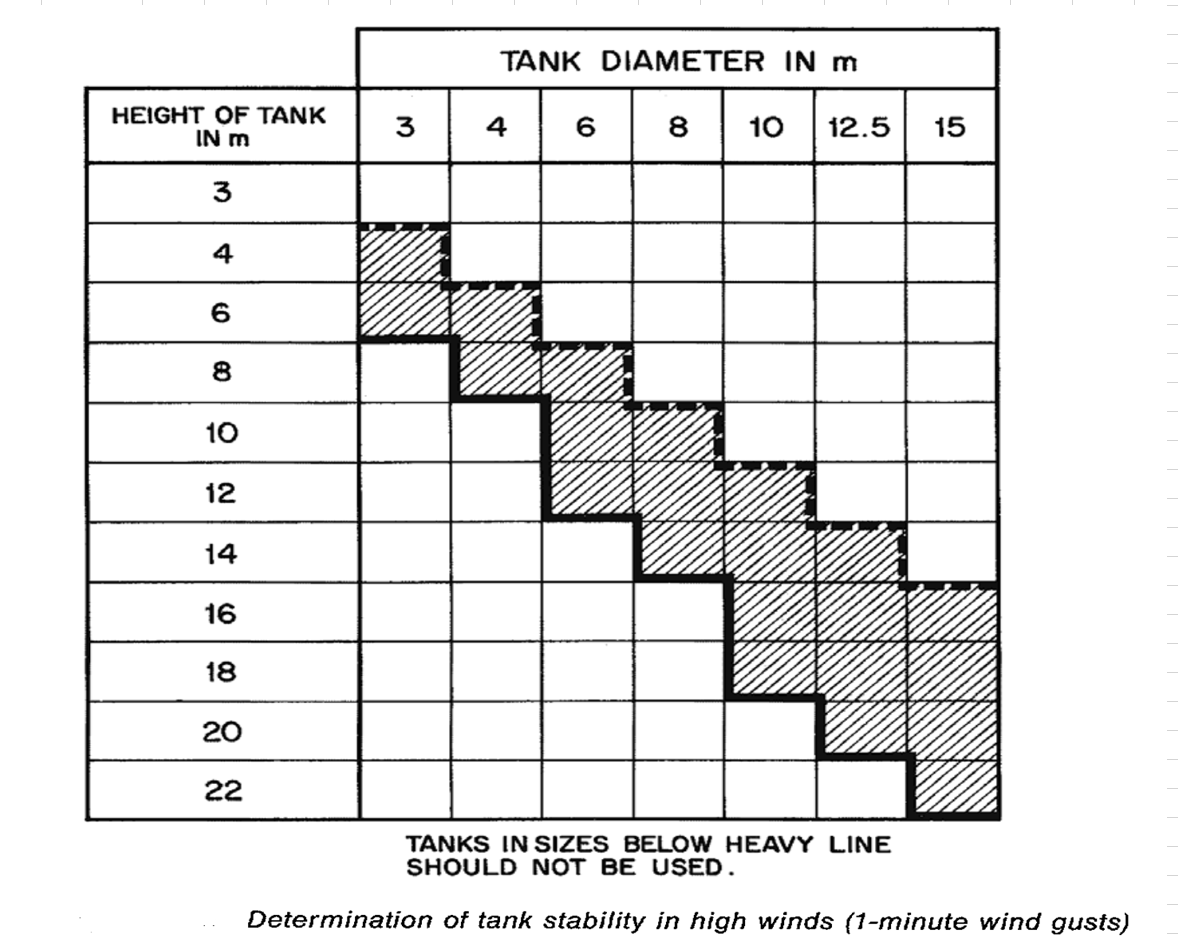
Vertical Tank Selection

New Blog Entry

Low Flow in Pipes- posted in Ankur's blog

2
- - - - -

Heat Exchanger Temperature Cross

heat exchanger, hysys, temperature cross

6 replies to this topic
Share this topic:
| More

#1 kaidlut

kaidlut

    Veteran Member

  • Members
  • 33 posts

Posted 20 December 2022 - 09:20 AM

Hi all,


currently I have one question puzzled me a lot.


When i do Hysys heat exchanger simulation,and when the cold stream outlet temperature is higher than the hot stream outlet temperature, there will be a error warnning "temperature cross".Usually,we try to avoid such situations. But i checked some of the process specifications of heat exchanger of my plant, this situation ( the cold stream outlet temperature is higher than the hot stream outlet temperature)does exist, is this normal ?


Thank you !


#2 latexman

latexman

    Gold Member

  • Admin
  • 1,899 posts

Posted 20 December 2022 - 09:38 AM

It is possible. Generally temperature crosses are best avoided with a single shell S&T exchanger. That is because the exchanger's effectiveness drops rapidly at the temperatures cross. However, there are configurations and strategies, including use of multiple shells, that can overcome this problem.

#3 Yogan

Yogan

    Brand New Member

  • Members
  • 4 posts

Posted 26 February 2024 - 08:33 AM

Hello latexman,


I am facing a similat problem and I posted it here:https://www.cheresou...-exchanger-lng/

Basicaly I would like to avoid it controling the effectiveness of my HX. So I will have the highest effectiveness as possible without having a themperature cross. 

I am just facing troubles to implement it in HYSYS. Coulsd you assist me?


Thank you very much for your attention.


#4 latexman

latexman

    Gold Member

  • Admin
  • 1,899 posts

Posted 26 February 2024 - 08:55 AM

Hi Yogan,


I saw your post.  I have no experience with HYSYS.  I dabble in Aspen+, but don't consider myself to be anywhere near an expert in that.  Since I had/have no specific HYSYS advice on your issue, I did not reply.  It seems you understand what I was talking about in my reply above, so you just need some specific HYSYS advice.  Hopefully, someone will reply shortly.  Have you searched HYSYS's knowledge base?  Aspen+ has one.  Have you called/online chatted with HYSYS support?


#5 Gole

Gole

    Junior Member

  • Members
  • 12 posts

Posted 27 February 2024 - 03:53 AM

Hey kaidlut, have you seen if the pressure of the fluid after it passes the heat exchanger dips down below the Vapour Pressure of the liquid? In that case, Aspen Exchangers (non-edr) do give the error of temperature cross. Hope this helps. 

Hi all,


currently I have one question puzzled me a lot.


When i do Hysys heat exchanger simulation,and when the cold stream outlet temperature is higher than the hot stream outlet temperature, there will be a error warnning "temperature cross".Usually,we try to avoid such situations. But i checked some of the process specifications of heat exchanger of my plant, this situation ( the cold stream outlet temperature is higher than the hot stream outlet temperature)does exist, is this normal ?


Thank you !


#6 Katerina

Katerina

    Brand New Member

  • Members
  • 1 posts

Posted Today, 06:18 AM

Hi all,


currently I have one question puzzled me a lot.


When i do Hysys heat exchanger simulation,and when the cold stream outlet temperature is higher than the hot stream outlet temperature, there will be a error warnning "temperature cross".Usually,we try to avoid such situations. But i checked some of the process specifications of heat exchanger of my plant, this situation ( the cold stream outlet temperature is higher than the hot stream outlet temperature)does exist, is this normal ?


Thank you !

Hello, kaidlut!


The "temperature cross" warning in HYSYS signals that the selected heat exchanger configuration violates the conditions for effective heat transfer.


In a classic 1-2 heat exchanger (one shell pass, two tube passes), the flow pattern is not true counter-current but a mixed-flow arrangement. When the terminal temperatures of the streams approach each other, this leads to a sharp reduction in the driving force for heat transfer. Mathematically, this is reflected in a drop of the log mean temperature difference correction factor (FT). When FT falls below approximately 0.8–0.75, HYSYS issues a warning because the required heat transfer area begins to increase dramatically while effectiveness declines.


To resolve the error and ensure proper heat transfer, you need to make the hydraulic configuration closer to true counter-current flow. Try adjusting the heat exchanger parameters in your simulation:

  1. Consider an E-type shell with one tube pass (true counter-current flow), but note that this may be mechanically challenging for large surface areas.
  2. Use an F-type shell (two shell passes). Combined with two or more tube passes, this approximates true counter-current flow, allowing you to overcome the temperature cross within a single unit.
  3. Increase the number of shells in series (the shells in series option in HYSYS). This is a standard engineering approach: if one shell cannot handle the duty without a temperature cross, the software automatically calculates a cascade of exchangers, eliminating the issue.
  4. Combine approaches: for example, two E-type shells in series, or an F-shell with a multi-pass tube bundle.

Ensure you are not attempting the physically impossible: the cold stream outlet temperature can never exceed the hot stream inlet temperature.


Good luck with your modeling!


Edited by Katerina, Today, 06:19 AM.


#7 breizh

breizh

    Gold Member

  • Admin
  • 6,968 posts

Posted Today, 08:12 AM

Hi (E) Katerina,

There is no point to duplicate your address. Both are active.

 Please consider deleting one .

Breizh


Reply to this topic


Similar Topics