Jump to content


Featured Articles

Check out the latest featured articles.

File Library

Check out the latest downloads available in the File Library.

New Article

Product Viscosity vs. Shear

Featured File

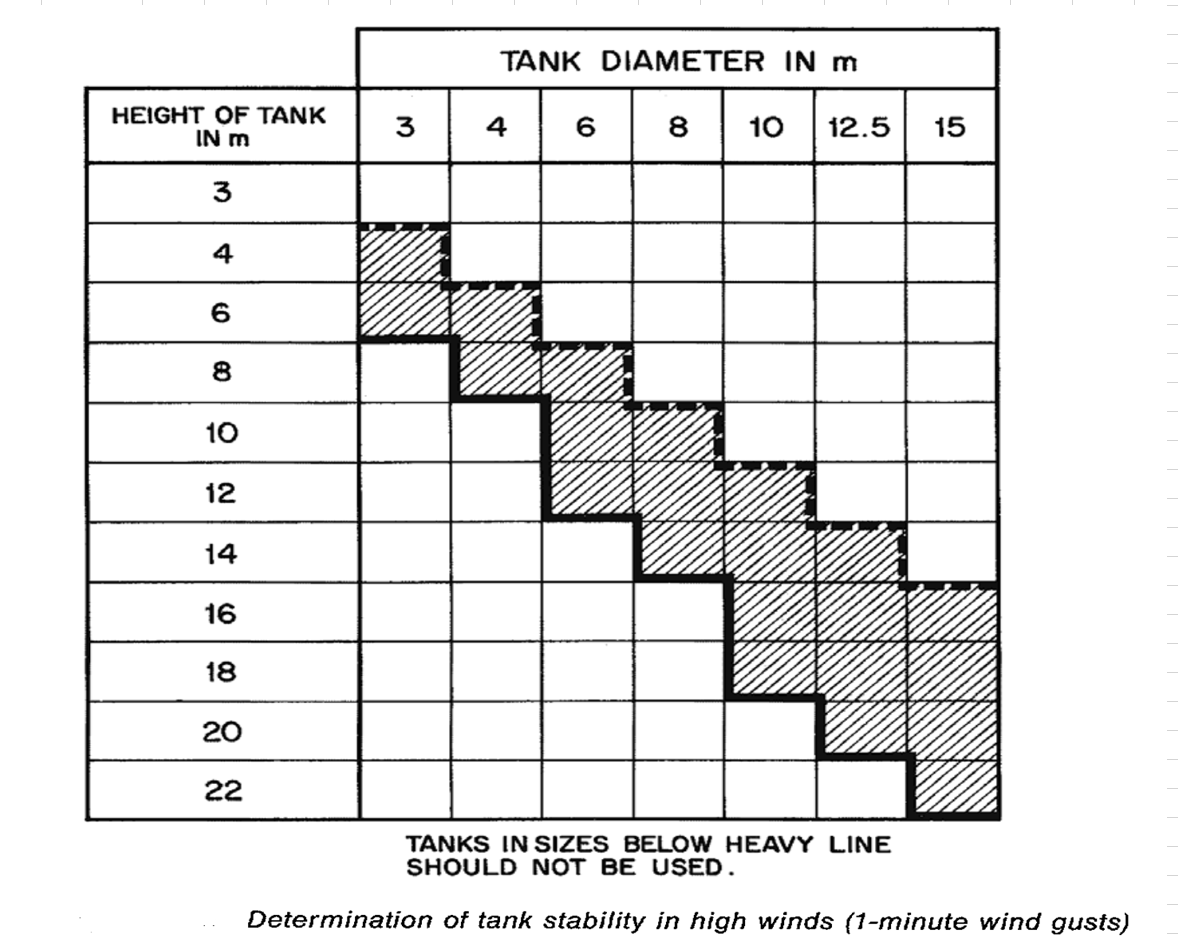
Vertical Tank Selection

New Blog Entry

Low Flow in Pipes- posted in Ankur's blog

High Losses From Teg Contactor


This topic has been archived. This means that you cannot reply to this topic.
5 replies to this topic
Share this topic:
| More

#1 JEptas

JEptas

    Brand New Member

  • Members
  • 3 posts

Posted 04 September 2009 - 06:39 AM

Hi All,

I'm currently working out in India & involved in trouble shooting the dehydration system for the facility. The field is black oil and produces around 40kbpd and 220 MMSCFD gas. I am a chemical engineer by discipline and have a years experience in E&P.

The issue is that losses from the bulk contactor are particularly high at the moment under normal operating conditions (in range of 0.6-1.5 Gal/mmscf). TEG losses have historically always been quite high rel to the norm (in rage 0.3-0.4 Gal/mmscf). This issue with high losses has occured previously and seems to occur most severly after a restart after shutdown.

Key information -

- The contactor is packed column type
- Dry gas water spec is 6lbs/mmscf
- There has always been some degree of hydrocarbon carryover into the contactor
- Column has shown increased foaming recently
- TEG losses are occuring primarily from contactor. TEG found in downstream compressor inlet scrubbers MBF-1320/50
- No additional filters downstream of charcoal filters in regen system.
- Operators are able to meet dewpoint spec and have been cutting back on recirulation rate to try & reduce losses

I attach a spreadsheet with PFD, Equipment specs, Historic TEG analysis and some trends of gas throughput, historic TEG loss and some of my calculations so far.

Background -

The issue occured initally after a shut down due to a hot oil treater explosion on the facility. After restart, heating medium (Therminol) was not availible for glycol regeneration hence flowed wet gas (~150 MMSCF) for a period until treater back online to provide TEG regeneration HM.

After restart of TEG regen system, losses were very high (around Sep '08). After operating some time with high glycol losses, forced to shut down. Vendor carried out inspection of internals of bulk contactor to look for signs of corrosion, deposition, damage, misplacement of distributor etc. Nothing found to be out of the norm.

The high losses continued for a few months then dec 08-April 09 losses fell back down to normal levels. Around May~June 09 high losses resumed...which is where I come in!

My Approach So Far

Since contactor TEG losses commonly attributed to high gas velocity & dirty TEG, I have been focussing my anaysis on these aspects so far. Included in my spreadsheet is an analysis of the ratio of calculated gas velocity through the contactor to Cv, the max allowable gas velocity based on Fs values supplied in original vendor documentation. So far there does not seem to be a clear link between gas velocity and TEG loss.


I would apprecaite it you guys could look over the spreadsheet and possibly provide some feedback & or suggestions as how to progress. If there is any additional information that would assist you please just ask.

Thank you in advance, J.E

Attached File  TEG System Troubleshooting.xls   1.37MB   177 downloads

#2 daryon

daryon

    Gold Member

  • ChE Plus Subscriber
  • 131 posts

Posted 08 September 2009 - 07:29 PM

Hi J.E.

I'm no expert on operation and maintentance of TEG dehydration packages but have fair expericience with design. So i'm probably not the ideal person to advise but thought i'd give you my ideas and hope it may prompt others to post their thoughts.

You said you checked the column internals and they are normal but have you / can you perform glycol analysis?
Glycol losses can be attributed to foaming and foaming is typically a result of hydrocarbons, corrosion inhibitors, or salt in the re-circulating glycol. You said foaming was occuring, and this is likely to cause increased entrainment of glycol and carryover to downstream equipment.

The elements in the charcoal filter should be changed when the clarity of the glycol deteriorates or when the glycol
analysis indicates a high hydrocarbon content, you won't pick up the filter needs changing on high differential pressure across the filter. You should maybe try changing them.

I Could be way off the mark, but good luck with the investigations

#3 Zauberberg

Zauberberg

    Gold Member

  • ChE Plus Subscriber
  • 2,728 posts

Posted 09 September 2009 - 01:28 AM

J.E.

Hydrocarbon detected in the rich TEG stream indicates certain degree of hydrocarbon co-absorption in the contactor tower. What's the temperature of lean TEG and feed gas entering the tower?

Also, you may want to check if there is any carryover of charcoal into your lean amine stream. I've seen this can happen.

I would try to perform a short and simple performance test at various gas rates - from turndown to max/design throughput of the tower. If foaming - which is clear - occurs at all rates of feed gas, then start looking at the quality and/or conditions of streams entering absorber. The culprit is probably there.

#4 JEptas

JEptas

    Brand New Member

  • Members
  • 3 posts

Posted 10 September 2009 - 01:12 AM

Thank you for the replies gents.

daryon, to answer your question there is a monthly (ish - there is a lot of data missing which i'm trying to recover) analysis of the TEG that is carried out and I attach all the historical data I have in the sheet below. As you can see, there is some level of Salt and Iron contamination at various points in the system's history.

Does anyone know if these levels are within normal tolerances or if they are particularly high?

In terms of the charcoal filters, I've been informed by operations that the changeout schedule of these is typically once a month. The attached data shows HC content of lean TEG to be typically between 1-3%v/v but as high as 7%v/v around Oct '08. Is there typically a cut off point beyond which the HC content is high enough to demand the change out of charcoal filters?

Zauberberg, the wet gas enters typically around 105oF and the incoming lean TEG is kept ~10oF above to avoid condensation of HC in the absorber. In the TEG analysis data attached, the Suspended solid content always comes back as zero. Do you perhaps think that the analysis would be missing any carryover of carbon since it is so fine?

I think the trial is a good suggestion, I will be going offshore soon so I can give that a go.

Returning to the TEG analysis, something that strikes me is that the pH of the TEG varies between 8-10 which from literature is deemed to be very high and can promote foaming/emulsions in the absorber. Does anyone have any thoughts on this?

Thank you both for your time,

J.E

Attached File  TEG analysis.xls   49.5KB   82 downloads

#5 Art Montemayor

Art Montemayor

    Gold Member

  • Admin
  • 5,782 posts

Posted 10 September 2009 - 05:27 AM


J.E.:

I have gone through this thread for various days, on and off. I have also downloaded the original workbook and worked on it, hoping that there was meaningful information therein. I haven’t had much free time lately here in Spain, so I have had to do this during the few lunch breaks I’ve had lately. It has taken time and effort – especially to break through the data presented – so I ask for everyone’s understanding on my not posting until now. I have a lot to add to this thread, but little time to do it in, so I’ll have to be very brief. I have been working on a 2-train, 25 MM NM3/day total capacity, TEG dehydration platform and so have had to work with the TEG system a lot as of late.

My comments are included in Rev1 of your workbook which I am attaching. My additional remarks are:

  • You have done an admirable job in assuming responsibility for finding a solution to what has been described to you as an important problem. You have compiled a lot of data – and done it in a correct, engineering manner by employing a spreadsheet workbook for the effort.
  • However, your data is communicated in a very sloppy and badly organized manner. Please note how I have had to edit and re-arrange just about all your tabulations in order to have a product one can peruse and print out with ease and understanding of what it is that is represented.
  • Additionally, just about none of your tables and charts have any titles or identifications in order to allow the reader to know exactly and accurately what it is that is represented by all this data.
  • The major point that I see missing from all your information is that of the design capacity of the unit. You have failed to give us any hard, basic data on the actual design capacity of the unit and who designed it. If we don’t know the design limits, how can we (or anyone else) determine if the operating conditions are appropriate to obtaining reasonable results?
  • You (or somebody else) did a lot of “entrainment calculations”, but you fail to stipulate what are the basis, reasons, conditions, equations, and algorithms for doing such calculations. What are the calculations supposed to tell us? We should know the basis and constraints of the relationships you are using in order to place any credibility on the calculation results.
  • The most important information to have on hand in the case of suspected TEG entrainment (or “vaporization”) losses is the designer/fabricator’s actual design capacity calculations.

You must concentrate on communicating your data and results in an accurate and organized manner. Your reader must be able to form his/her own opinions with regards to the data. Data MUST have titles and identification as to what is represented and ALL numbers must have UNITS – if that is the case.

In summary, we can’t help more than what I have attempted to do. I basically agree that the TEG consumption seems to be extraordinarily high. But you fail to tell us how and in what manner the TEG is added. You also fail to ensure us that the given figures are absolutely accurate. The REAL, BOTTOM-LINE TEG consumption should be identified as the TOTAL TEG added to the unit over a period of, say a year, divided by the TOTAL amount of gas dehydrated by that same unit during the same period of time. You have not furnished that data – or identified it.

Please do not take this post as a critique of you or your work. I am assuming that I am directing myself to a fellow colleague who has requested my opinion or help and as a professional engineer that is what I believe I am doing. There is nothing personal in my remarks or comments. Of course, they can be interpreted or “perceived” as something else. But this response is meant to be positive help and that is why I have dedicated my time and effort. I hope it results in some help to your efforts.
Attached File  TEG_System_TroubleshootingRev1.xls   1.38MB   132 downloads


#6 Anilnair

Anilnair

    Brand New Member

  • Members
  • 2 posts

Posted 07 July 2010 - 12:23 PM

Hi
Still same status?
Anil

Edited by Anilnair, 13 August 2010 - 09:35 AM.


Similar Topics