Jump to content


Featured Articles

Check out the latest featured articles.

File Library

Check out the latest downloads available in the File Library.

New Article

Product Viscosity vs. Shear

Featured File

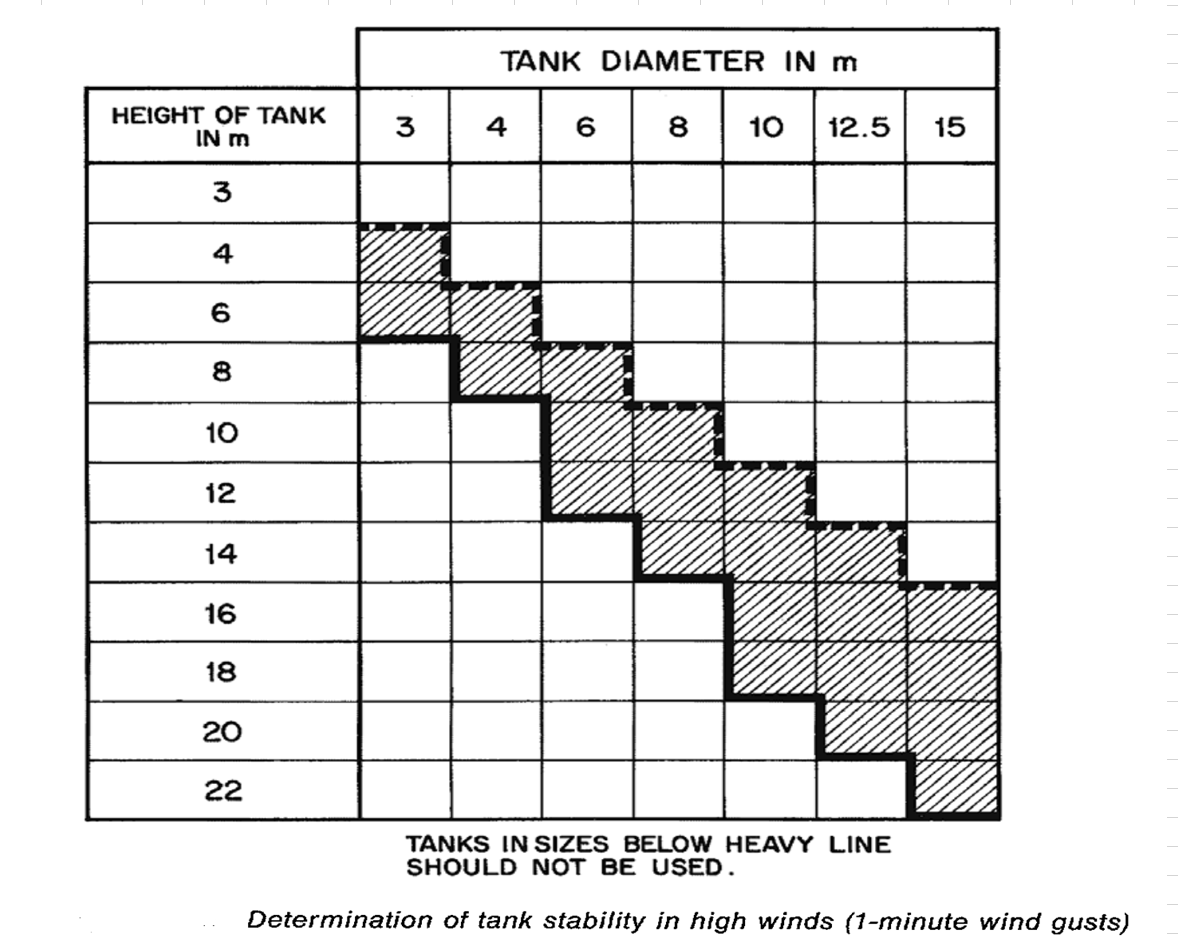
Vertical Tank Selection

New Blog Entry

Low Flow in Pipes- posted in Ankur's blog

Water Flashing At The Shell Side Of Heat Exchanger


This topic has been archived. This means that you cannot reply to this topic.
5 replies to this topic
Share this topic:
| More

#1 TS1979

TS1979

    Gold Member

  • Members
  • 164 posts

Posted 09 August 2012 - 11:42 AM

Attached drawing is a configuration of high pressure steam stripper.

At the bottom of the column, the liquid is near its saturation condition. To recovery the waste heat from the stripped water, the stripped water will exchange heat with the feed. Due to pressure loss and elevation change, the stripped water may flush in the first heat exchanger the stripped water in. To avoid the water flushing, the normal way is to raise the column to get enough liquid head for the heat exchanger. In our case, the skirt height is 22 ft, the column is 72 ft and the total height of the column is 94 ft.

By raising the column to a higher level, the foundation and structure costs will increase significantly.

My questions are:

1, What is the consequence if the water flushes at the shell side of the exchanger? Will this cause a condensed-steam induced water hammer inside the heat exchanger because eventually the flushed steam will be condensed by the cold feed?
2, Will this flushing steam significant affect heat exchanger heat transfer or not?

3, Is there other way to not raise the column at same time to avoid water flushing?

I appreciate your thoughts

Attached Files


#2 Art Montemayor

Art Montemayor

    Gold Member

  • Admin
  • 5,782 posts

Posted 09 August 2012 - 01:55 PM

Yuze:

I think what you mean to write is the word “FLASH” not “flush”.

I also think your concern is that since the bottoms water product from the stripper sump is saturated, this same saturated water will flash as it undergoes a pressure drop through the series of exchangers.

I don’t believe that will be the case. Your temperature approach (the temperature of the “lean” water from the stripper – the temperature of the “rich” water on its way to the stripper top feed section) will be such that you should obtain good heat transfer as soon as your lean water enters the first exchanger. I would expect that this approach would be approximately 10 to 15 oF. This technique or preheat process is used quite a lot with most stripper operations. The amine acid and sour gas process uses it as do a lot of other operations. The saturated bottoms liquid does not suffer a flashing in the preheat exchangers. Of course, you should try to have as small a pressure drop between the stripper sump and the first exchanger. You certainly are not starved for pressure (the stripper is at 516 psig). Your concern should be the pressure drop from the stripper sump to the first exchanger – not the absolute pressure drive.

Your PFD shows the lean water entering the first exchanger at the top of the shell. I would introduce the first lean water pass in at the BOTTOM of the shell on the first exchanger. In other words, if your exchangers are “stacked”, then I would enter at the bottom exchanger first. The hydrostatic head of the saturated water will be such that the pressure drop through the first exchanger will not be enough to cause any flashing.

Refer to my attached revision #2 of your workbook for a PFD explanation. Of course, you are required to place strategic vent/purge valves at the top of each high point in the water piping. This is a requirement to vent non-condensables at the startup.

You do not have to raise the stripper; it is high enough already.

Attached Files


#3 TS1979

TS1979

    Gold Member

  • Members
  • 164 posts

Posted 09 August 2012 - 09:19 PM

Art, thanks for your great idea!

Actually, the approach temperature for the first heat exchanger will be at lest 36°F. My PFD is just based on my memory to make the cold/hot currents as count-current flow as possible. We will have six (6) heat exchangers and two exchangers will be stacked together.

Since the project is going to proceed detail design and the current design is to install 22 ft skirt, it may be difficult to change the design. However, if the cost for raising the column is high (foundation, construction, maintenance), changing the design is possible.

#4 Art Montemayor

Art Montemayor

    Gold Member

  • Admin
  • 5,782 posts

Posted 10 August 2012 - 08:42 AM

Yuze:

With a temperature approach of approximately 35 oF, I would seriously design for having the very slender stripper as low as possible to grade. The reason I am saying this is because of the following:

Your operating pressure is relatively high. You should keep your diameters as small as possible to design in as much pressure integrity as possible. Smaller diameters allow you to use a liberal corrosion allowance (which should be a concern when dealing with a water stripper), lower the units closer to grade (for easier and safer maintenance), reduce the overall height of the stripper (and lessen wind and seismic design), and reduce the overall construction cost.

I would employ heat exchangers that are minimum 20 feet long (tube length, tubesheet-to-tubesheet). For your installation you should be able to reduce the height of the stripper by 12 feet -- the bottom of the stripper sump should be approximately 12 feet above grade. My experience is that you should be able to fit in two heat exchangers under that height, stacked one on top of the other -- and install the other two pairs on the side of the first pair. The stripper sump bottom nozzle should be able to be fitted to the top of the first pair of exchangers and you can then follow the scheme of your first pfd. It has been conventional practice to pipe up two exchangers in series in the above manner when designing amine plants in the past. I have operated MEA units using 12 to 15% MEA solution (which is essentially water) in the above manner with no flashing problems. You should be also able to do the same.

The design problem(s) you will encounter will be in the shell and tube heat exchangers. You will need approximately 100 1 in. OD condenser tubes per pass to obtain a decent 4 ft/sec design velocity in the tubes. This makes for an 18 inch shell size -- which is very slender. If you use a TEMA BFM design (with a fixed horizontal baffle), you could obtain the desired counter-current heat transfer in one 24 inch shell with 2-passes on the shell side. (Refer to my workbook that you can download from our website; this gives you all the sizes of the tubes, shells, tube counts, etc.) However, using an F shell in a 24 inch size is awkward and may not be practical from a fabrication point of view. I would hope that Dale Gulley (SRfish) reads this thread and is able to contribute his very expert opinions and comments on this application. This could easily turn into a heat exchanger application problem instead of a stripper problem.

From the above, you will note that the shell size of the heat exchangers employing counter-current heat exchange allows you to easily drop the height of the stripper skirt -- as I had originally guessed.

#5 Dacs

Dacs

    Gold Member

  • Members
  • 457 posts

Posted 12 August 2012 - 08:29 PM

Just to reinforce what Art has contributed, introducing the bottom stream from the bottom side may negate any need to increase the skirt height.

I had the chance to encounter the same issue in one of my projects in KSA where another contractor which had the same issue opted to increase the skirt height whereas we decided to introduce the bottom feed on the bottom side. In my case, we just ensured that the column LLL is higher (I believe around 50mm margin) than the HEx nozzle inlet and the heat exchanger will take care of cooling the bottom stream (and therby increasing the degree of subcool: minimize the risk of vapor formation).

In your case, you have to check the equipment layout against your HEx size, you may (or may not) need to increase the column height, which will largely depend on the piping routing from the column to your HEx, considering piping clearances as per your company/client's specs, to meet the requirement of your column holdup level (which is LLL/LLLL) higher than your nozzle inlet.

Hope this helps :)

#6 TS1979

TS1979

    Gold Member

  • Members
  • 164 posts

Posted 12 August 2012 - 10:36 PM

Dacs,

Thanks for you sharing your experience.


Similar Topics