
 Forums
 Blogs
Blogs Articles
 File Library
 FAQ
FAQ Search
 FB
FB

 2
2


Hello
I would appreciate clarification on what “process temperature maintenance” means when specifying electric heat tracing.
Consider a water-saturated gas entering a pipe at 35°C, with a water dew point of 35°C at the inlet pressure. If the specified heat-tracing maintenance temperature is 35°C:
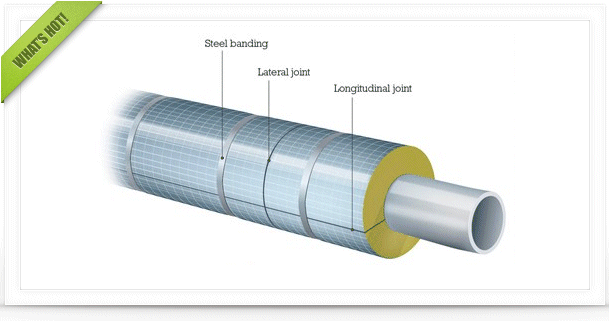
- Does this refer to the pipe outer-wall temperature or the actual bulk fluid temperature? Does maintaining the pipe wall at 35°C ensure that the fluid remains at this temperature?
- As the gas flows, it may cool due to ambient heat losses and the Joule–Thomson effect as pressure decreases. Can heat tracing prevent water condensation under these conditions, considering that the dew point also changes with pressure? Would additional tracing duty or a temperature margin above the dew point be required?
- Is tracing for temperature maintenance primarily intended to keep stagnant fluid warm when flow stops, or is it also designed to maintain fluid temperature during continuous flow?
- What triggers the tracing to operate? Is it typically controlled by a sensor on the pipe wall beneath the insulation? How does this differ for self-regulating tracing?





 Answered
