
 Forums
 Blogs
Blogs Articles
 File Library
 FAQ
FAQ Search
 FB
FB

I have a few querries.
* What is the max vacuum for which API 620 tanks can be designed? Can
tanks be designed for vacuum higher than 45 mm WC? Which code shoud be
reffered to?
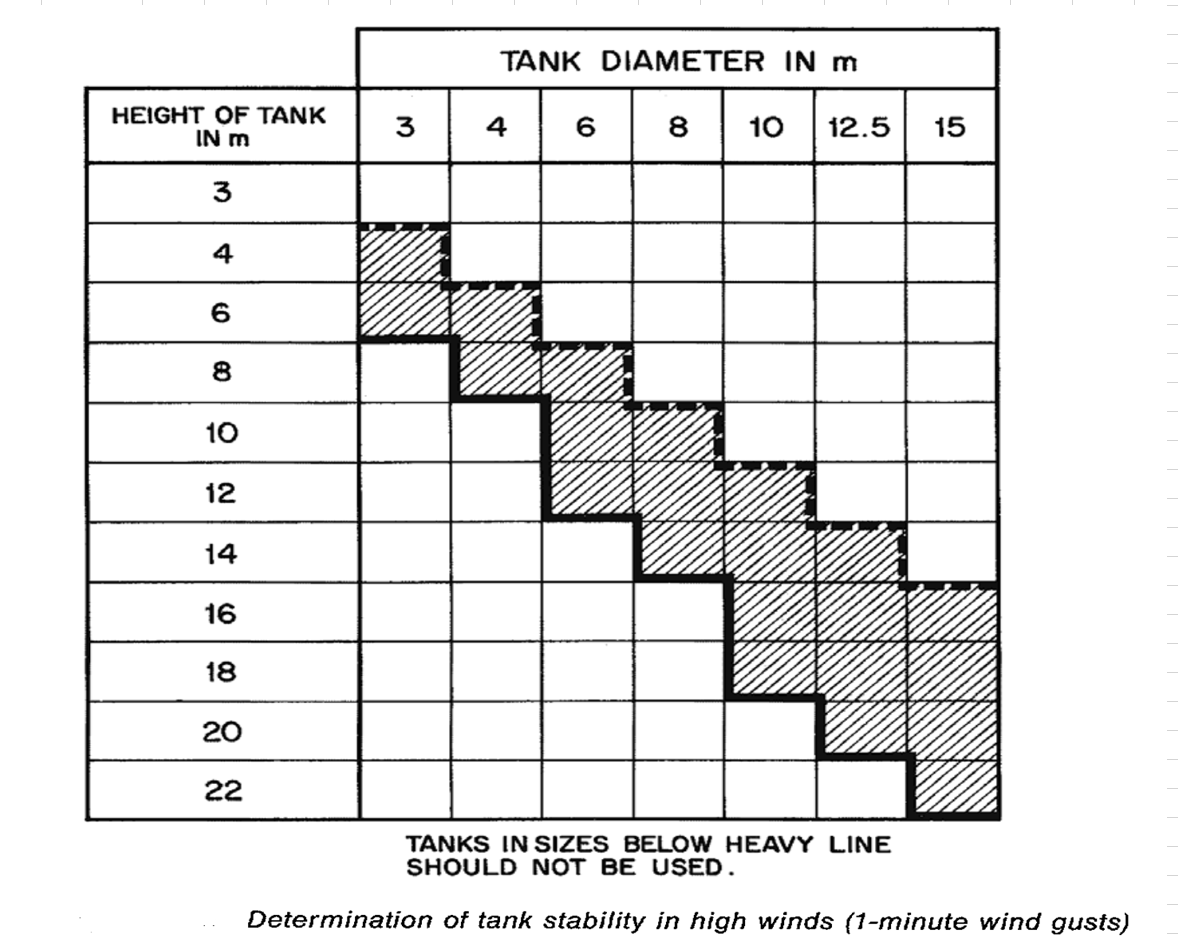
* What is the size limitation of storage tanks designed with frangible
roofs API 650 ?
* Where are slope in tank bottoms used? Where are slope out tank
bottoms used?
Regards
Benoy John
Process Engineer
Bechtel Ltd,
New Delhi.
|
|

Storage Tank Design
Started by benoyjohn, Mar 11 2003 12:16 AM
2 replies to this topic
Share this topic:
#2

MJCronin
-

- Members
-

- 4 posts
Brand New Member
Posted 11 April 2003 - 01:34 PM
With regard to your tank questions:
1) API-620, like API-650, require vacuum protection devices for protection against collapse.
If a new tank is being specified, the design vacuum pressure noted on the datasheets should be about -5 to -10 inches WC ( enough to actuate the vacuum protection device)
2) I understand that only "small tanks" can use fragible roofs. This issue is being evaluated by an API-650 code group. Installing a pressure relief device on "small diameter" tanks is the only realistic way to provide some protection.
3) Sloped bottoms on large tanks are discussed in a book titled "Aboveground Storage tanks" by Phillip Myers. Essentially, "cone-up" designs are the only ones in use. "Cone-down tanks corrode in a place tht is difficult to repair. These sloped bottomed tanks have been used in crude oil storage.( the slope was necessary to promote water drainage)
However, I believe that the trend is to now use flat bottomed tanks with superior internal coatings
Just my thoughts/recollections.................
MJC
1) API-620, like API-650, require vacuum protection devices for protection against collapse.
If a new tank is being specified, the design vacuum pressure noted on the datasheets should be about -5 to -10 inches WC ( enough to actuate the vacuum protection device)
2) I understand that only "small tanks" can use fragible roofs. This issue is being evaluated by an API-650 code group. Installing a pressure relief device on "small diameter" tanks is the only realistic way to provide some protection.
3) Sloped bottoms on large tanks are discussed in a book titled "Aboveground Storage tanks" by Phillip Myers. Essentially, "cone-up" designs are the only ones in use. "Cone-down tanks corrode in a place tht is difficult to repair. These sloped bottomed tanks have been used in crude oil storage.( the slope was necessary to promote water drainage)
However, I believe that the trend is to now use flat bottomed tanks with superior internal coatings
Just my thoughts/recollections.................
MJC
#3
Afshin445
-

- Members
-
- 194 posts
Gold Member
Posted 19 April 2012 - 04:11 PM
3) Sloped bottoms on large tanks are discussed in a book titled "Aboveground Storage tanks" by Phillip Myers. Essentially, "cone-up" designs are the only ones in use. "Cone-down tanks corrode in a place tht is difficult to repair. These sloped bottomed tanks have been used in crude oil storage.( the slope was necessary to promote water drainage)
Just my thoughts/recollections.................
MJC
Dear Experts,
Is anybody has this book or know where I can find it? I really need this book now. Appriciate if can help me in this regards.
Afshin
Edited by Afshin, 19 April 2012 - 04:12 PM.
Similar Topics

Design Of High Temperature Duct WorkStarted by Guest_tjsegan_* , 15 Jun 2026 |
|

|
||
Hello, Design Of Natural Gas Liquefaction Processes.Started by Guest_guoyinyanliner_* , 21 May 2026 |
|
|
||
Absorber And Stripper Design - Eqbm Data?Started by Guest_ChemEngBoy26_* , 03 May 2026 |
|
|
||
Nitrogen Bubbling Into TankStarted by Guest_Ranga v_* , 24 Apr 2026 |
|
|
||
 Answered Answered
Adsorber Design Essay QuestionsStarted by Guest_Kahirn_* , 10 May 2019 |
|
|

