Jump to content


Featured Articles

Check out the latest featured articles.

File Library

Check out the latest downloads available in the File Library.

New Article

Product Viscosity vs. Shear

Featured File

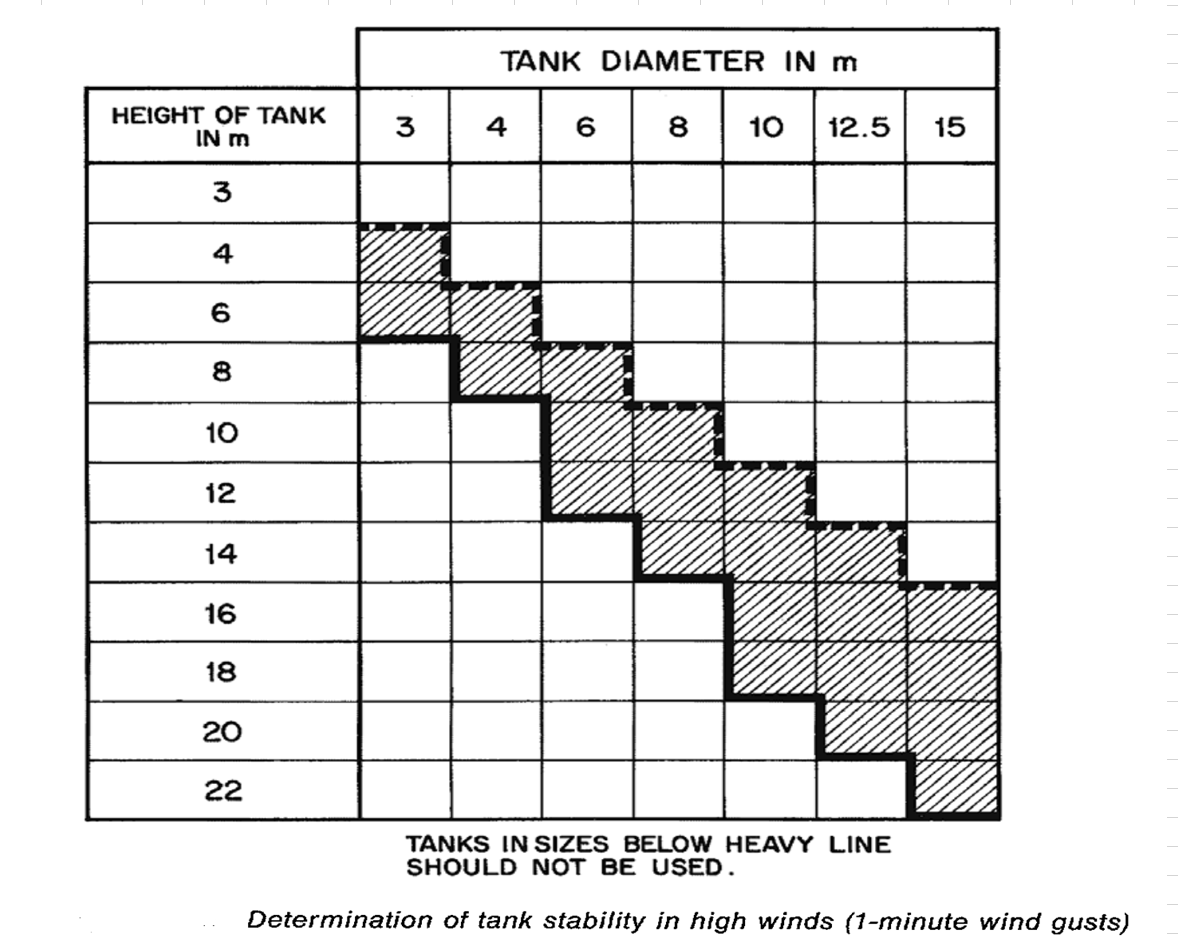
Vertical Tank Selection

New Blog Entry

Low Flow in Pipes- posted in Ankur's blog

Limiting Case Scenario's For Psv Sizing


This topic has been archived. This means that you cannot reply to this topic.
1 reply to this topic
Share this topic:
| More

#1 hollerg

hollerg

    Veteran Member

  • Members
  • 30 posts

Posted 04 August 2003 - 11:38 AM

I have read that pool fires consume 3-4 mm of fuel per minute. I am reviewing the relief requirements in a moderately sized batch plant. The area has a drain that is maintained open, but some material will pool until the spilled volume drains away. The liquids in the area are 1B flammables

A) Is it proper to limit the fire scenario to the time to burn off/drain the maximum spill inventory within that containment area, in smaller plants?

Assume that there are remote (hand operated) valves that exist for sources to the area, but that the access to those valves is clear because they are larger but remote, raw material storage tanks.

cool.gif If I compute that the vessel cannot be heated to the disk burst point by that fire scenario, is this no longer a credible case?

C) Is there any design approach for jet fire impingement, or would I need this only when handling Class 1A flammables or pressurized gaseous processes?

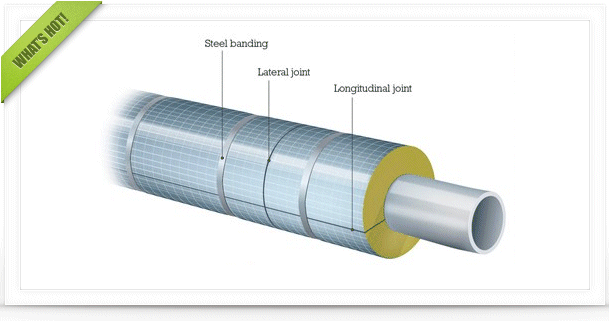
D) For a reduced duration fire, does anyone have data on how long a stainless steel over-jacket on 2" of fiberglass insulation can be counted on to last before it has no insulation value?

E) Do any companies say that making allowances for the duration, as described above is considered good engineering practice?


Gary

#2 pleckner

pleckner

    Gold Member

  • ChE Plus Subscriber
  • 564 posts

Posted 05 August 2003 - 06:39 PM

I'm going to take a shot at most of your questions but I will have to research a little on question ©.

A. When we do fire relief cases, it is customary NOT to consider the time element. The contents will boil and cause an overpressure situation, period. You need to size for the maximum flow that can be generated whether this takes place for 1 minute or 1 hour or longer.

B. If you can prove that a given credible scenario will not cause relief then this is stated as such. In other words, you would do the calculation and in the documentation just state that there will be no relief. The fire or some other scenario may very well be credible but not all credible scenarios will cause relief. A non-credible scenario might be tube rupture for a heat exchanger designed to the 2/3 rule. A credible scenario but one that does not cause relief might be the dead heading of a pump. Your fire case may be very credible but due to the physical properties of the liquid in a vessel, you cannot achieve relieving pressure. Therefore, credible scenario but no relief.

C. I'll have to get back on this. It sounds like a NFPA research to me.

D. I can't answer this either but in my experience, I generally don't take credit for insulation (just a bit of conservatism). Saying that, I have done so as long as the jacket is strapped on.

E. In my experience, it is not good engineering practice to consider duration (see response to A above). However, I don't care and neither should you care what any other company says or does not say. The only company that counts is yours and your safety department!!!!


Similar Topics